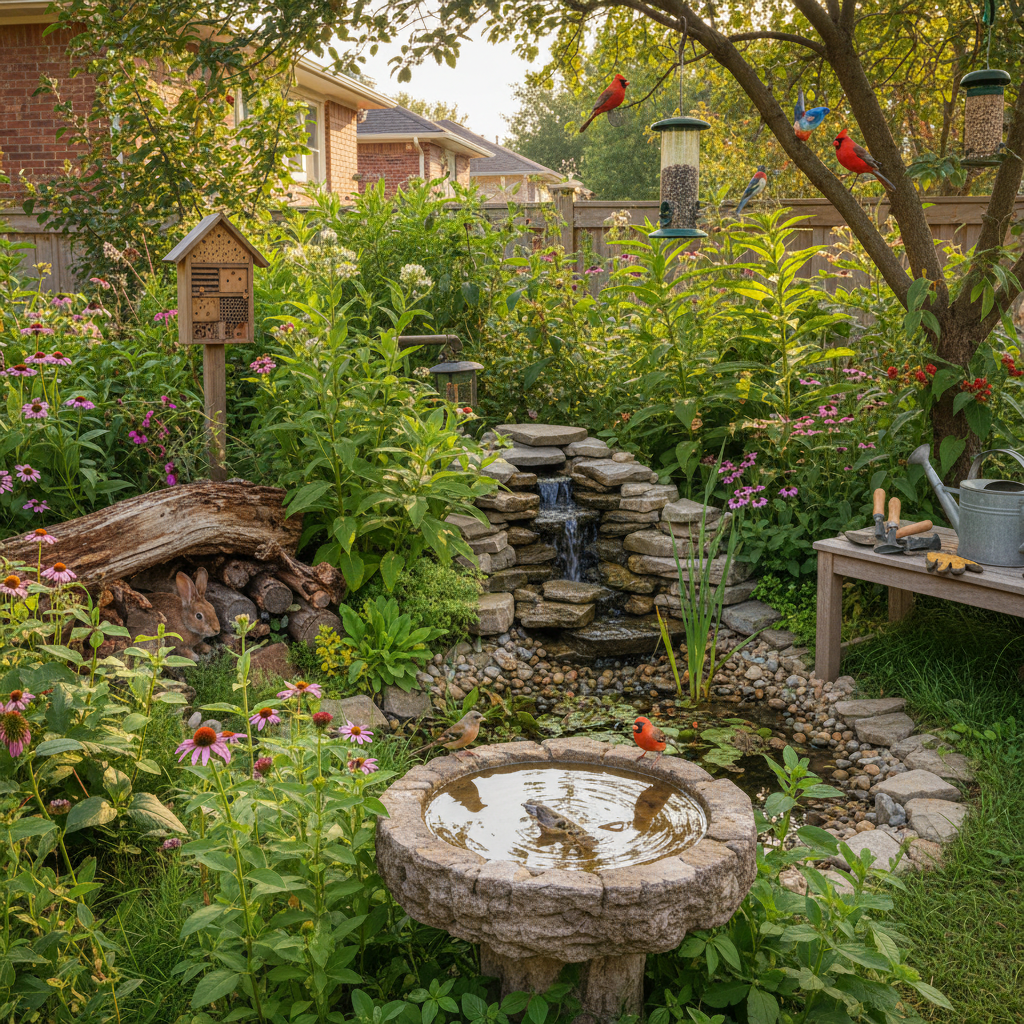
Why Create a Backyard Wildlife Habitat?
Benefits for Local Ecosystems
Creating a backyard wildlife habitat helps support local ecosystems. Native plants and shelter encourage birds, butterflies, insects, and small animals to thrive, restoring the balance of nature right outside your home. A natural habitat improves soil health, helps pollination, and supports biodiversity.
Enjoying Birds, Butterflies, and Beneficial Insects
A backyard habitat brings nature closer, offering a chance to observe wildlife. Birds sing, butterflies visit flowers, and helpful insects like bees and ladybugs help your garden grow. Watching these creatures makes outdoor time more fun and educational for everyone.
Planning Your Backyard Wildlife Habitat
Assessing Your Outdoor Space
To start, look closely at your yard. Notice sunny and shady spots, soil type, and any existing plants. Measure your available space and note any fences, trees, or water features. Sketch a simple map to plan habitat zones.
Identifying Local Wildlife Species
Research birds, insects, and animals common in your area. Check local guides or websites. Learn what these species need for food, water, shelter, and breeding. This information will help you choose plants and features that benefit local wildlife.
Setting Realistic Goals for Your Habitat
Set goals based on your space and resources. Do you want to attract birds, butterflies, pollinators, or small mammals? Start simple, such as providing bird food and water, then expand your efforts as you gain experience. Focus on one or two groups at first.
Essential Elements of a Backyard Wildlife Habitat
Providing Food Sources for Wildlife
Wildlife need a variety of food sources. Plant native flowers, shrubs, and trees that supply seeds, fruit, nectar, and nuts. Use bird feeders with seeds or suet and plant berry bushes. Leave some plants to set seed for winter food.
Supplying Water Year-Round
Animals need clean water for drinking and bathing. Add a birdbath, shallow dish, or small pond. Change still water regularly to prevent mosquitoes and keep water fresh in every season, even winter.
Creating Shelter and Nesting Sites
Wildlife need places to hide, sleep, and raise young. Use shrubs, brush piles, log stacks, and rock piles for shelter. Put up nest boxes for birds and bat houses. Keep some garden areas wild and undisturbed.
Step-by-Step: How to Build Your Wildlife-Friendly Backyard
1. Choosing Native Plants and Trees
- Visit a nursery or local garden center. Ask for native species suited to your region.
- Select at least three layers: ground cover, shrubs, and trees if space allows.
- Plant in clusters to create dense shelter and maximize food sources.
- Space plants based on their mature size, and water them well after planting.
2. Installing Bird Feeders and Baths
- Select feeders and birdbaths designed for your local species.
- Place feeders near shrubs or trees for safe hiding spots.
- Hang or mount feeders at varying heights for different birds.
- Fill birdbaths with 2-3 inches of water and clean them weekly.
3. Making Brush Piles, Logs, and Rock Shelters
- Collect fallen branches, twigs, or logs and stack them in a quiet corner.
- Add rocks or stones to create cool, moist hiding places.
- Leave leaf litter under trees and shrubs for insects and small animals.
4. Creating Pollinator Gardens
- Choose a sunny location with well-drained soil.
- Plant a variety of flowers that bloom from spring to fall.
- Include milkweed (for monarch butterflies) and herbs like mint and lavender.
- Avoid double-flowered varieties; single blooms have more nectar and pollen.
Low-Maintenance Tips for Sustainable Wildlife Habitats
Water Conservation and Eco-Friendly Practices
Mulch garden beds to save water and prevent weeds. Install a rain barrel to collect water for gardens and wildlife. Choose drought-tolerant native plants that thrive with less watering.
Avoiding Chemicals and Pesticides
Skip chemical fertilizers, pesticides, and herbicides. These can harm wildlife and beneficial insects. Use natural compost and hand-pull weeds when possible. Encourage ladybugs and birds to control pests naturally.
Creating a Year-Round Habitat
Keep some seed heads, stems, and brush through winter for food and shelter. Plant evergreens or dense shrubs for winter protection. Top up feeders and water sources all year, especially during freezing temperatures.
Common Challenges and How to Overcome Them
Unwanted Animals and Pests
Raccoons, squirrels, and other animals may try to eat bird food or damage gardens. Use baffles on feeders, cover compost, and avoid leaving pet food outside. Plant pest-resistant plants and use gentle animal deterrents if needed.
Neighborhood and HOA Considerations
Check local guidelines and HOA rules before starting your habitat. Speak to neighbors about your plans and share benefits. Keep your yard tidy, limit large brush piles, and select low-profile shelters to avoid concerns.
Inspiring Examples: Real-Life Backyard Wildlife Habitat Success Stories
Many families have transformed small yards into wildlife havens. For example, a student in Illinois turned a patch of lawn into a pollinator garden that now hosts over ten butterfly species. In Florida, a suburban family added a native pond and soon had visiting frogs and dragonflies. These success stories show any backyard can support local wildlife with simple changes.
Frequently Asked Questions About Backyard Wildlife Habitats
- Do I need a large yard? No. Even a small space or balcony can provide food and shelter for wildlife.
- How long before I see wildlife? Some birds and insects may appear within days or weeks, while others may take a season to find your habitat.
- Is it expensive to start? No. Many supplies can be found or built at home. Start small and expand as you learn.
- Will it attract pests? With good planning, you can welcome wildlife and minimize problems. Avoid open compost and use secure feeders.
Resources and Tools for Getting Started
- Local gardening centers for native plants
- Online guides about birds and butterflies in your area
- National Wildlife Federation–Certified Wildlife Habitat Program
- Rain barrel kits, bird feeder supplies
- Basic gardening tools (shovel, trowel, watering can)
- Books and apps on wildlife gardening and identification
Creating a backyard wildlife habitat supports local ecosystems and brings nature closer. By planning carefully, selecting native plants, supplying water and shelter, and following eco-friendly habits, anyone can invite birds, butterflies, and bees to visit their backyard. Start small, stay patient, and watch your outdoor space fill with life.